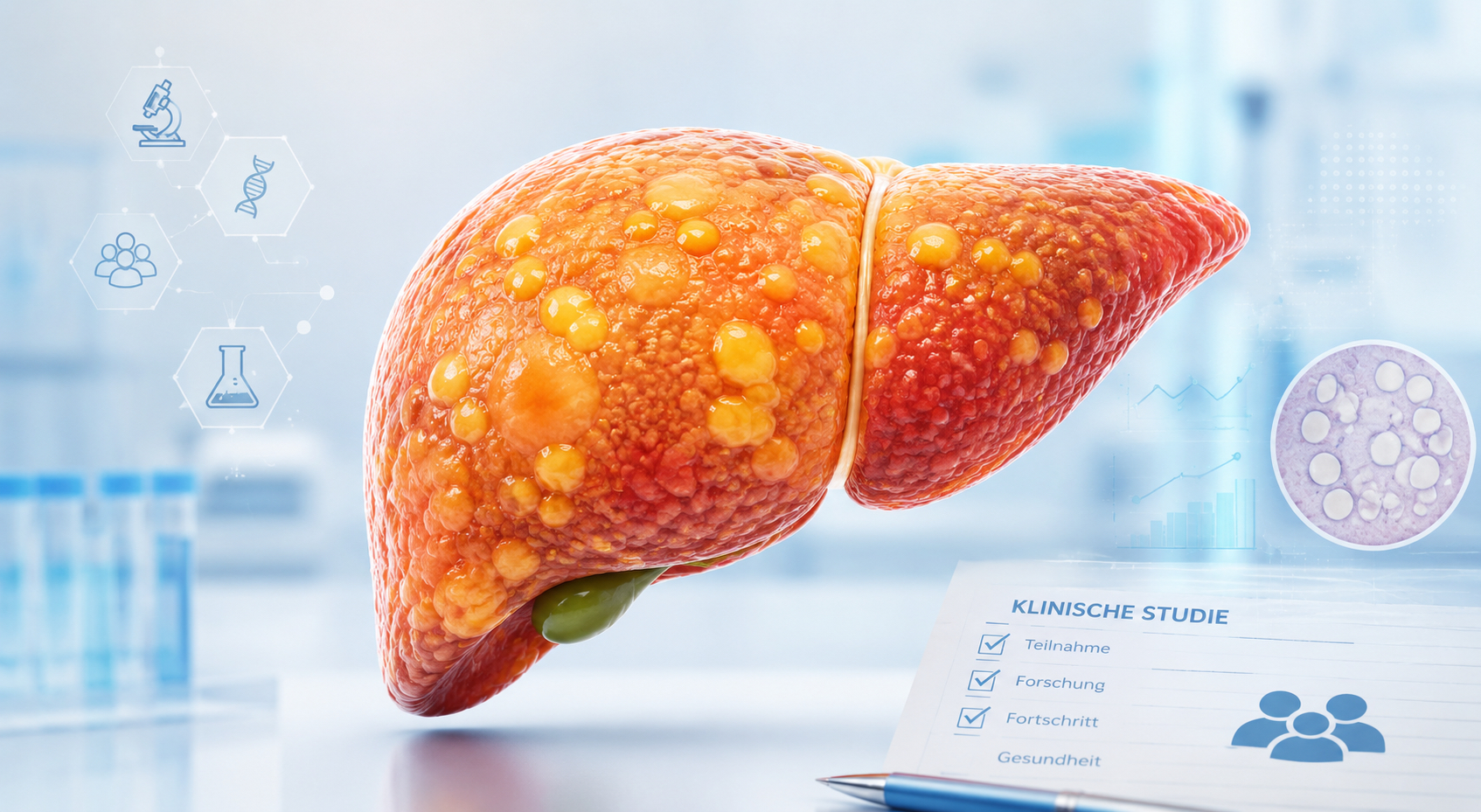

Fatty liver disease is now one of the most common liver conditions – yet it often goes undetected for a long time.
Many people initially feel healthy, even though fat has already begun to accumulate in the liver. The key principle is clear: the earlier fatty liver disease is detected, the better it can be managed.
What is fatty liver disease?
Fatty liver disease occurs when excessive fat builds up inside liver cells. The liver plays a central role in metabolism, detoxification, and energy regulation. When it is under constant strain, lasting damage can occur.
There are two main types of fatty liver disease:
- Non‑alcoholic fatty liver disease (NAFLD) – often associated with excess weight, diabetes, or lack of physical activity
- Alcohol‑related fatty liver disease – caused by regular, high alcohol consumption
Today, non‑alcoholic fatty liver disease is by far the most widespread form.
Why does fatty liver disease often go unnoticed?
In most cases, fatty liver disease causes no symptoms or only very vague complaints, such as:
- fatigue
- a feeling of pressure or fullness in the upper right abdomen
- general malaise
As a result, many people only learn about the condition by chance, for example during an ultrasound examination or routine blood tests.
Why is fatty liver disease not harmless?
If left untreated, fatty liver disease can progress:
- to liver inflammation
- to scarring of the liver (fibrosis)
- and ultimately to liver cirrhosis
In addition, fatty liver disease is closely linked to other conditions such as type 2 diabetes, high blood pressure, and cardiovascular disease.
What can be done about fatty liver disease?
The good news is that fatty liver disease is often reversible. Key measures include:
- weight loss
- regular physical activity
- a balanced diet low in sugar and fat
- reducing or avoiding alcohol
Medications specifically targeting fatty liver disease are currently being intensively researched.
Why clinical studies on fatty liver disease are so important
As fatty liver disease continues to become more common, medical research in this area is highly active. Clinical studies help to:
- develop new treatments
- improve diagnostic methods
- better understand disease progression
As a study participant, you may benefit from:
- close medical supervision
- regular health check‑ups
- the opportunity to actively contribute to medical research
Learn more and get involved
You may be eligible to take part in a fatty liver study – even if you only have risk factors or do not yet notice any symptoms.
On probandeninfo.de, you will find:
- current studies on fatty liver disease
- clear information about study procedures
- a non‑binding way to get in touch
Learn more now – your participation may help pave the way for new treatment options.
Progress together.